


Acupuncture and Red Light Therapy for Pain Relief Inflammation and Healing

Pain is rarely just one thing. A sore knee may involve irritated nerves, tight muscles, swelling, poor circulation, and a nervous system that has stayed on high alert too long. That is why many people look beyond a single tool when they want lasting relief.
Acupuncture and red light therapy approach the body from different angles. Acupuncture uses precise stimulation of points on the body to influence nerves, muscles, connective tissue, and pain signaling. Red light therapy, also called photobiomodulation, uses specific wavelengths of light to support cellular energy, circulation, and tissue repair.
Used together, these therapies may offer a practical, low-drug way to support pain relief, reduce inflammation, and improve healing. The research is still growing, but the early picture is promising, especially when the therapies are used as part of a broader care plan.
This article is for education only and is not a substitute for medical advice. Anyone with a medical condition, implanted device, pregnancy, cancer history, or light sensitivity should speak with a qualified clinician before starting treatment.
Acupuncture Treatment

How acupuncture works in the body
Acupuncture is a core therapy in traditional Chinese medicine, but modern research also describes it through the lens of neurophysiology. During a treatment, a trained practitioner inserts very thin sterile needles into selected points. These points may be near the painful area or farther away along related pathways.
From a biomedical view, acupuncture appears to affect several body systems at once.
It may help by:
Stimulating sensory nerves in the skin, fascia, and muscles
Encouraging the release of endorphins and other natural pain-modulating chemicals
Influencing spinal cord and brain pathways involved in pain perception
Reducing muscle guarding and trigger point sensitivity
Supporting local blood flow around tight or irritated tissues
Research on acupuncture for pain is stronger than research for many other wellness therapies. A large individual patient data meta-analysis led by Andrew Vickers and colleagues, published in Archives of Internal Medicine in 2012 and later updated, found that acupuncture was better than both no-acupuncture controls and sham acupuncture for several chronic pain conditions, including back and neck pain, osteoarthritis, chronic headache, and shoulder pain.
That does not mean acupuncture works the same for everyone. Pain source, treatment frequency, practitioner skill, lifestyle factors, and overall health all shape the result. Still, the evidence suggests acupuncture is more than a placebo response for many people with chronic pain.
Acupuncture healing also fits well into integrative care because it is usually gentle, repeatable, and adaptable. A practitioner can adjust point selection based on whether the main issue is sharp pain, dull aching, swelling, stiffness, reduced range of motion, stress-related tension, or recovery after injury.
How red light therapy works in the body
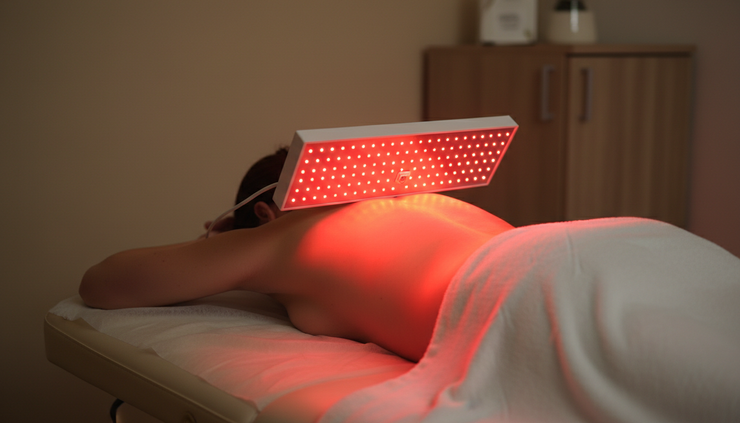
Red light therapy uses red and near-infrared light, often from LED panels, handheld devices, or clinical laser units. The light is applied to the skin over muscles, joints, or injured tissue. Unlike ultraviolet light, red and near-infrared light do not tan or burn the skin when used properly.
The key idea is that certain wavelengths of light can interact with mitochondria, the energy-producing parts of cells. One widely discussed mechanism involves cytochrome c oxidase, an enzyme in the mitochondrial respiratory chain. When light is absorbed, it may help improve cellular energy production, influence nitric oxide release, and affect oxidative stress signaling.
In plain language, red light therapy may help cells do their repair work more efficiently.
Researchers often use the term photobiomodulation for this process. Michael Hamblin, PhD, a well-known researcher in the field, has written extensively on how low-level light can influence inflammation, tissue repair, and pain pathways. Clinical studies and reviews have explored photobiomodulation for conditions such as tendinopathy, oral mucositis, osteoarthritis, muscle soreness, and wound healing.
One reason red light therapy attracts interest is its broad potential. It does not force a single chemical change. It nudges cellular processes involved in energy, circulation, inflammation balance, and repair. That makes it especially relevant for problems where slow healing and chronic irritation overlap.
Why acupuncture and red light therapy may work well together
Acupuncture and red light therapy do not do the same job. That is the point.
Acupuncture may be especially useful for changing pain signals, relaxing guarded muscles, and influencing nerve communication. Red light therapy may be especially useful for supporting cellular activity, circulation, and tissue repair. When combined, they may address both the signal of pain and the condition of the tissue.
Think of it like treating a stiff, irritated shoulder. Acupuncture may calm the nervous system response and reduce muscle guarding around the joint. Red light may support local tissue recovery in the tendon, capsule, or surrounding soft tissue. Together, the result may be better comfort, easier movement, and improved tolerance for rehab exercises.
This pairing may also help with the cycle that keeps many musculoskeletal problems going:
Tissue irritation triggers pain.
Pain causes muscle tension and protective movement.
Reduced movement limits blood flow and slows recovery.
Slow recovery keeps inflammation active.
The nervous system becomes more sensitive.
Acupuncture may help interrupt the pain and tension part of the cycle. Red light therapy may support the tissue repair and inflammation side. The combined approach is not magic, but it is logical.
Some clinics use red light before acupuncture to warm the area and increase circulation. Others use it after acupuncture to extend the calming effect and support recovery. In some cases, treatment may focus on the same body region. In others, acupuncture may address both local pain and whole-body patterns such as sleep, stress, and muscle tension, while red light targets the injured tissue.
The phrase Red light therapy, acupuncture, muscle recovery captures why many athletes and active adults are curious about the combination. Recovery is not only about reducing soreness. It also involves circulation, nervous system balance, sleep quality, soft tissue repair, and inflammation control.
Conditions that may benefit from the combination
The strongest case for combining acupuncture and red light therapy is in conditions where pain, inflammation, and slow repair overlap. Research varies by condition, and more direct studies on the exact combination are needed. Still, each therapy has enough evidence on its own to make the pairing reasonable in selected cases.
Chronic back and neck pain
Back and neck pain often include muscle tightness, joint irritation, nerve sensitivity, and stress-related tension. Acupuncture has been studied widely for chronic spine pain, with evidence suggesting modest but meaningful benefit for many people.
Red light therapy may support these cases by improving local circulation and reducing inflammatory signaling in irritated tissues. Some reviews of low-level laser therapy, a related form of photobiomodulation, have reported benefit for neck pain, though outcomes depend on dose, wavelength, and treatment schedule.
For chronic spine pain, the combination may help when the goal is to:
Reduce pain enough to move more comfortably
Relax tight spinal muscles
Improve tolerance for physical therapy or corrective exercise
Decrease reliance on pain medication when clinically appropriate
Osteoarthritis and joint stiffness
Osteoarthritis involves cartilage changes, joint inflammation, stiffness, and altered movement patterns. Acupuncture has been studied for knee osteoarthritis, and some clinical guidelines discuss it as an option for pain management, especially when patients want non-drug support.
Red light therapy may help by targeting local inflammation and supporting cellular activity around the joint. It will not regrow cartilage in an advanced arthritic joint, but it may help reduce discomfort and stiffness for some people.
The best results often come when these therapies support a larger plan that includes strength training, weight management when relevant, mobility work, and medical treatment as needed.
Tendon and soft tissue injuries
Tendons heal slowly because they have limited blood supply compared with muscles. Problems such as tennis elbow, Achilles tendinopathy, rotator cuff irritation, and plantar fasciitis can linger for months.
Acupuncture may reduce pain and muscle compensation around the injured area. Some practitioners also use techniques that target trigger points or tight bands of muscle that overload the tendon.
Red light therapy may support the tissue side of the problem. Photobiomodulation has been studied in tendinopathy and soft tissue healing, with some evidence suggesting it can reduce pain and improve function when the dose is appropriate.
This combination may be most useful when paired with progressive loading exercises, because tendons usually need controlled stress to regain strength.

Muscle soreness and athletic recovery
After hard training, muscles may feel sore because of microscopic tissue stress, inflammation, and nervous system fatigue. Acupuncture may help reduce muscle tightness and pain sensitivity. Red light therapy may support cellular recovery and reduce exercise-related soreness.
Studies on photobiomodulation for exercise recovery have reported mixed but encouraging results, especially when treatments are timed well and applied with suitable dosages. Some research suggests it may help reduce delayed onset muscle soreness and improve markers related to recovery.
For active people, the goal is not to hide pain and push harder too soon. The goal is to recover well enough to train consistently without building up chronic irritation.
Wound healing and post-procedure recovery
Red light therapy has a long history of study in wound healing, skin repair, and inflammation control. It has been explored in settings ranging from oral care to dermatology and rehabilitation.
Acupuncture may support recovery indirectly by helping with pain, sleep, stress regulation, and circulation. Some patients also use acupuncture to manage nausea, tension, and discomfort during recovery from medical procedures, with guidance from their care team.
Anyone recovering from surgery, an open wound, infection, or cancer treatment should only use these therapies with medical clearance. Timing matters, and some areas should not be treated without approval.
What the science can and cannot say yet
There is solid research behind acupuncture for several chronic pain conditions. There is also a growing body of research behind photobiomodulation for pain, inflammation, and tissue repair. The missing piece is a large amount of high-quality research on the exact combined protocol.
That means the combined approach is best described as evidence-informed, not proven for every condition.
A few points help keep expectations realistic:
The right dose matters for red light therapy. Too little may do nothing, and too much may reduce the benefit.
Acupuncture point selection and technique matter.
Chronic pain often needs repeated care, not one session.
Sleep, stress, nutrition, movement, and medical diagnosis still matter.
A temporary reduction in pain is not the same as full tissue healing.
The most useful integrative care does not ask one therapy to do everything. It matches the right tools to the right phase of healing.
What a combined session may look like
A typical combined visit starts with an assessment. The practitioner asks about the pain location, onset, triggers, medical history, medications, activity level, and goals. They may check range of motion, tenderness, muscle tone, and posture or movement patterns.
From there, a session may include:
Red light therapy over the painful or injured area for a set amount of time
Acupuncture points near the problem area
Acupuncture points away from the area to address related nerve pathways or whole-body patterns
Gentle movement advice or home care suggestions
A follow-up plan based on response
Some people feel relaxed during acupuncture and notice less pain right away. Others feel gradual improvement over several sessions. Red light therapy is usually painless. The area may feel warm, but it should not burn.
Mild soreness after acupuncture can happen, especially if tight muscles or trigger points were treated. Bruising is possible but usually minor. Red light therapy has a strong safety profile when used correctly, but eye protection may be needed depending on the device.
Who should be careful or avoid treatment
Acupuncture and red light therapy are generally considered low risk when performed by trained professionals, but they are not right for every situation.
Speak with a healthcare professional first if any of these apply:
Pregnancy
Bleeding disorders or blood-thinning medication
Pacemaker or implanted medical device
Active cancer or recent cancer treatment
Seizure disorders triggered by light
Photosensitive conditions or medications
Open wounds, infection, or unexplained swelling
New severe pain, numbness, weakness, fever, or unexplained weight loss
Choose a licensed acupuncturist who uses sterile, single-use needles. For red light therapy, ask about wavelength, treatment time, distance from the skin, eye protection, and whether the device is intended for therapeutic use.

A balanced path toward pain relief and healing
Acupuncture and red light therapy make sense together because they support different parts of the healing process. Acupuncture can help calm pain signaling, relax protective tension, and influence nervous system balance. Red light therapy can support cellular energy, circulation, inflammation control, and tissue repair.
For pain relief, inflammation reduction, and improved healing, the combination may be especially useful for chronic back or neck pain, osteoarthritis, tendon irritation, muscle recovery, and some recovery plans after injury or procedures. The best results usually come when these therapies are part of a complete plan that includes movement, sleep, nutrition, and proper medical diagnosis.
The takeaway is simple: when pain has both a nervous system component and a tissue-healing component, using therapies that address both may offer a smarter route to recovery. A qualified integrative provider can help decide whether this combination fits the condition, the goals, and the stage of healing.

Comments